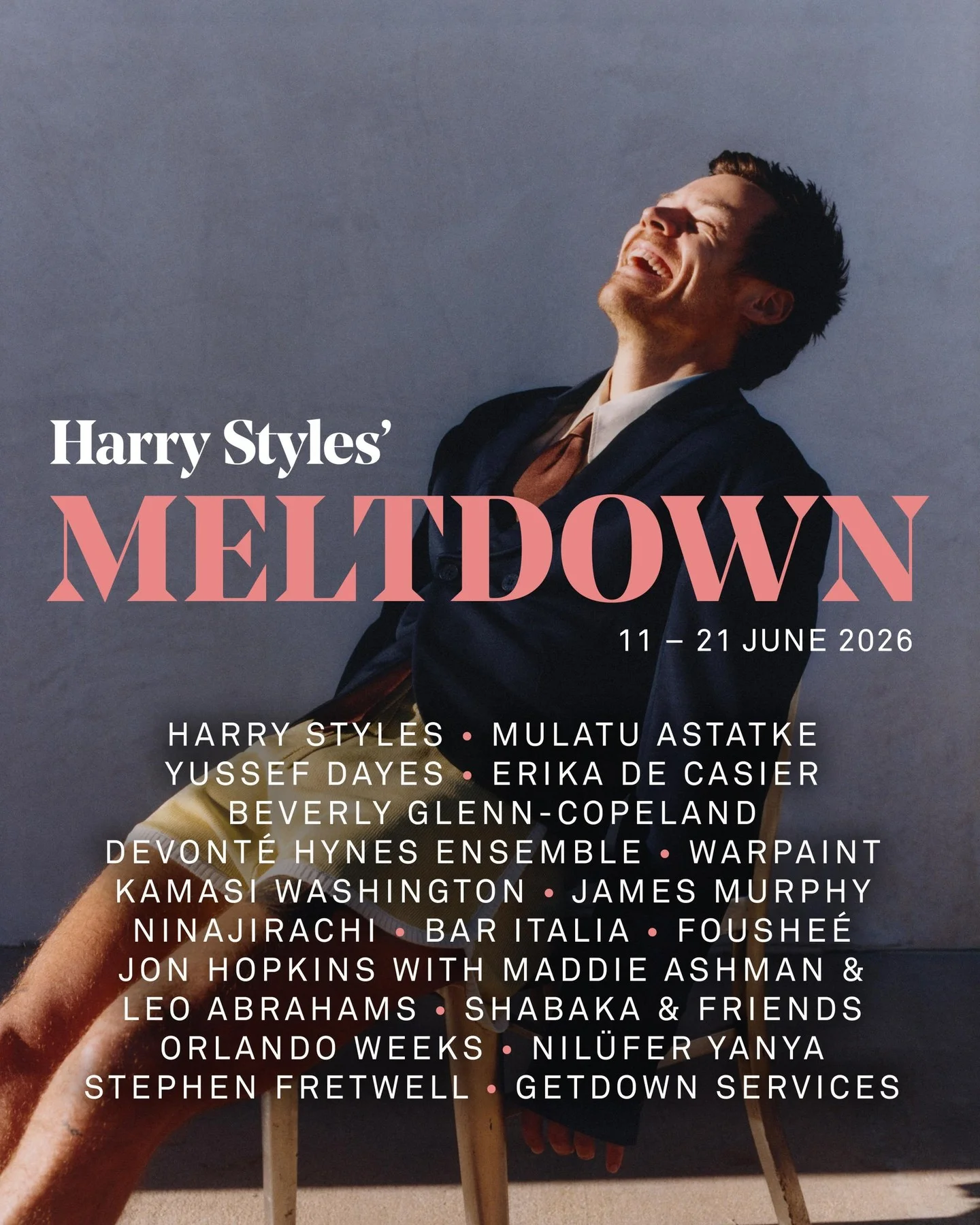
Meltdown Festival 2026 is not doing the lazy celebrity-curator thing. Harry Styles has lined up a Southbank Centre run that swings from Warpaint and Kamasi Washington to Yussef Dayes, Mulatu Astatke and James Murphy, which is a much better use of his clout than a tidy little branding exercise.
Taking over the Southbank Centre in London from 11 June to 21 June 2026, this year’s Meltdown lands in the venue’s 75th anniversary year and feels built for people who actually care what a curator does. Styles also heads to the Royal Festival Hall on 16 June, though, naturally, the headline gig details are still being guarded like a state secret.
Essential Details
- Dates: 11 June to 21 June 2026
- Location: Southbank Centre, London, England
- Tickets: Available at southbankcentre.co.uk
- On sale: Members from 9 April, general sale from 10 April
- Airport/Transport: London City Airport is the nearest airport, with Waterloo the easiest station for the site
A curator with an actual point of view
This is a proper South Bank booking, not a poster built by committee. The bill moves from indie-rock haze to modern jazz, art-pop, electronic mutation and left-field songwriting, which is exactly how Meltdown should work. It is a festival that should feel slightly weird around the edges, and this one does.
Warpaint opening the run is the right kind of flex. The Los Angeles band still make atmosphere feel physical, and giving them the first slot on the poster sets the tone immediately. Then Kamasi Washington arrives with not one but two performances, and Yussef Dayes keeps the modern UK jazz current humming without turning the whole thing into homework.
Thursday, 11 June – Warpaint gets the first word
Warpaint kick off the festival with what looks like their only 2026 show, which makes the booking feel even sharper. Their slow-burn indie-rock still has the kind of tension most bands spend whole careers chasing, and Meltdown is smarter for putting them front and centre.
Friday, 12 June – Intimate rooms, sharp elbows
Stephen Fretwell brings the sort of songwriting that makes a room go quiet in the best way. Ninajirachi follows with a late-night electronic set built for the foyer, and Shabaka & Friends should be the evening’s wildcard, because anything with Shabaka involved tends to bend the room a little.
Saturday, 13 June – Pop that refuses to sit still
Erika de Casier is one of those artists who makes restraint sound expensive, which is a useful skill on a bill like this. Fousheé brings a more jagged, genre-blurring edge, and the contrast should be half the fun.
Sunday, 14 June – Kamasi does not do small
Kamasi Washington presents two separate Royal Festival Hall shows, Jazz Legends Reimagined and Fearless Movement Live, which is exactly the sort of overachieving move you want from one of contemporary jazz’s biggest names. Nilüfer Yanya gives the day its emotional centre, with songs that can bruise you without ever raising their voice.
Tuesday, 16 June – The headline slot finally arrives
Getdown Services warm up the Purcell Room with their twitchy, funny, slightly feral energy before Harry Styles takes the Royal Festival Hall. The headline show is still under wraps, which is annoying, but also very on-brand for a curator who clearly enjoys the tease.
Wednesday, 17 June – A living jazz landmark
Mulatu Astatke is the sort of booking that makes the whole festival look smarter. The Ethiopian jazz pioneer is not padding the bill, he is anchoring it.
Thursday, 18 June – The bill turns beautifully odd
Beverly Glenn-Copeland brings deep warmth and hard-won grace to the Royal Festival Hall, then bar italia drag the evening somewhere scruffier, stranger and more exciting. That is the sweet spot.
Friday, 19 June – Experimental without the posture
Orlando Weeks gives the night a songwriter’s backbone, and the Devonté Hynes Ensemble turns it into something more orchestral and more curious, with Adam Tendler, Cæcilie Trier and Tariq Al-Sabir in the mix. This is the sort of booking that rewards people who stay out late.
Saturday, 20 June – Electronic lift-off
Yussef Dayes leads the charge, with Jon Hopkins, Maddie Ashman and Leo Abrahams pushing the sound into a more muscular electronic lane. Then James Murphy closes the evening in the Queen Elizabeth Hall Foyer, which feels like exactly the right amount of post-club swagger for Meltdown.
Why this Meltdown matters
Meltdown has always worked best when the curator has taste and the nerve to show it. Styles is leaning into that lineage instead of sanding it down, and the result is a bill that makes room for jazz heads, indie people, electronic lifers and pop fans without pretending they all came for the same reason.
The 75th anniversary context helps too. Southbank Centre does not need a celebrity rescue mission, but it does need bookings that make the place feel alive across its rooms, foyers and halls. This one does that. It is less about spectacle for its own sake and more about a proper summer programme with a point of view.
Book early if you want in. The members’ presale hits on 9 April and general sale follows on 10 April, and the headline show details are still being held back. That usually means the sharpest seats disappear first.
What to know before you go
- Move fast – the best nights are spread across a tight window, and the Royal Festival Hall slots will go first.
- Plan for venue-hopping – Southbank Centre is compact, but the rooms are different enough that you should build in time between sets.
- Stay nearby if you can – Waterloo makes life easy, and late-night exits across the river are less fun when you are tired.
- Do not expect camping – this is a city festival, so think transport, dinner, and a bed, not mud and torches.
- Keep an eye on final details – Styles’ headline gig still has more to be announced, and that could shift how people build their weekend.
Secure your tickets at southbankcentre.co.uk. If you like your festival lineups with a little taste, a little history and a little danger, Meltdown Festival 2026 is very much the one to watch.